
Art Studio · Meaning of Life
Meaning of Life 1
About values, instant satisfaction, and Vanitas art — through Jacob, Esau, and the question of what is meaningful and worth doing.
Story · Genesis 25:29-34
A birthright for a bowl of stew
Esau comes in from the field exhausted. Jacob is cooking stew. Esau asks for the red stew, and Jacob asks for the birthright. Esau says, “I am about to die; of what use is a birthright to me?” The story begins with hunger, but it becomes a question about value: what do we trade when immediate satisfaction feels urgent?
What do you notice about Esau's condition when he came in from the field?
What role do physical desires and immediate needs play in Esau's decision?
What did the birthright represent in Esau's culture and family?
Values · what captures us
Two brothers, two meanings of life
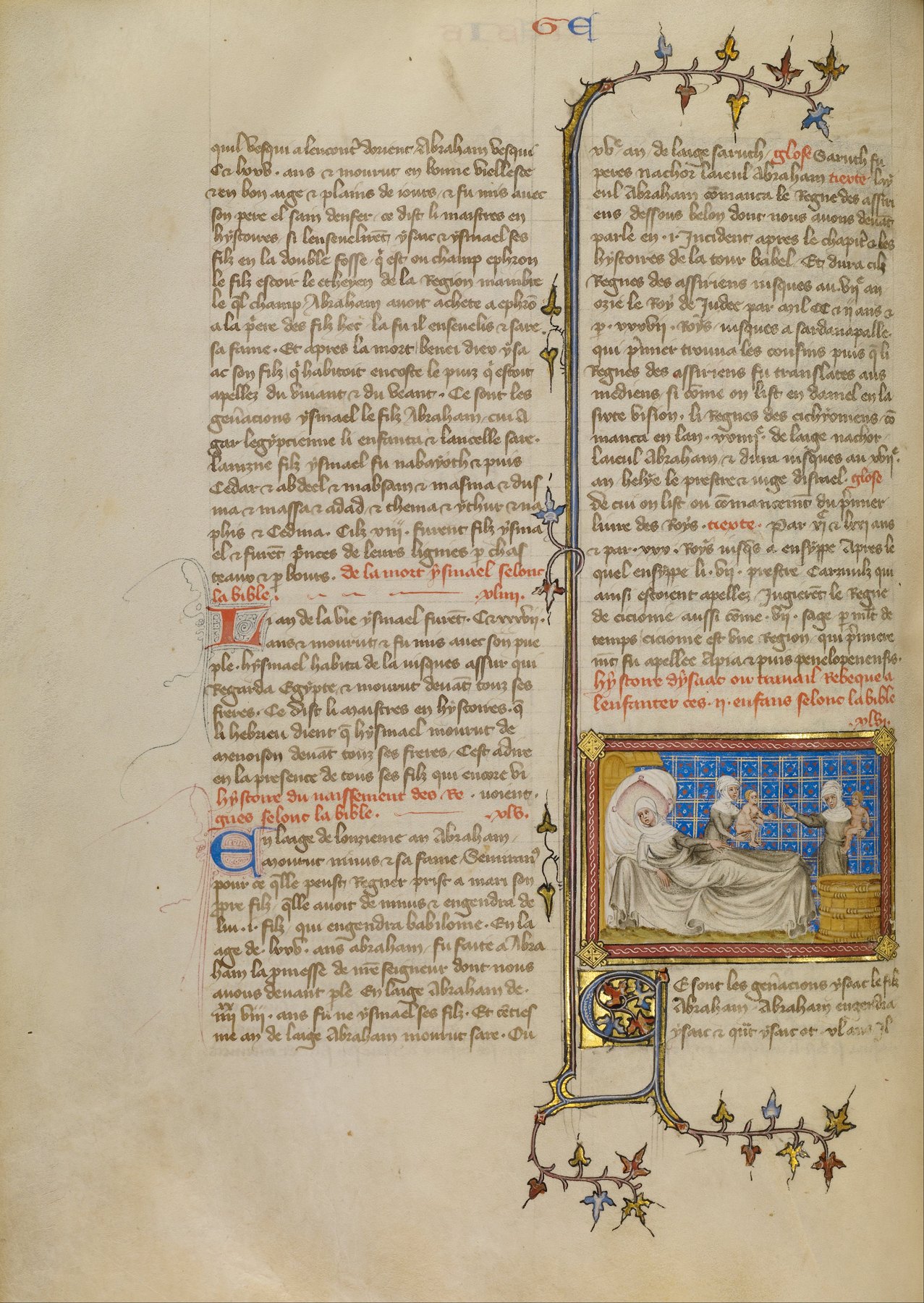
Bible Historiale
A small illuminated scene makes the family story feel precious, careful, and worth preserving.
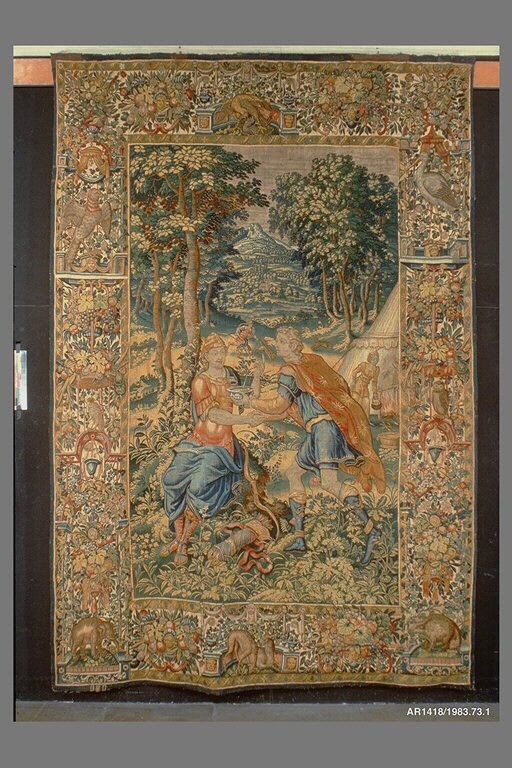
Esau Selling His Birthright to Jacob
The tapestry turns a private decision into something grand. It asks whether small choices can carry lifelong meaning.
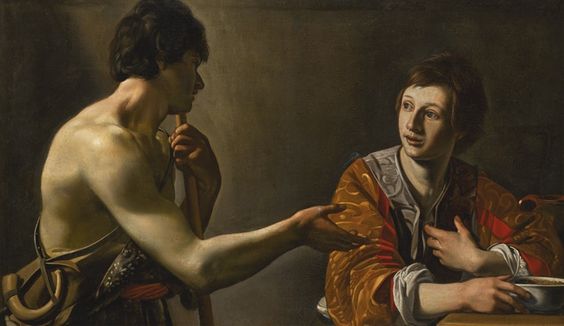
Nicolas Tournier — Esau Selling His Birthright
Candlelit faces emerge from deep shadow, with the tension of a lifelong trade compressed into one table.
Based on your observation, what differences do you notice between these two people?
When you are tired, stressed, lonely, or discouraged, what are you most tempted to turn to for satisfaction instead of God?
Are there areas of your life where you are exchanging something eternal for something temporary?
Attention · the ladder and the table
What do you see first?
He Huizhi — Jacob's Ladder and Red Bean Soup
A crowded table, color, food, and motion pull our attention. The class asks what most easily captures us and causes us to overlook God's presence.
Reflection questions
- When you first saw this painting, what caught your attention first? Why?
- Would you like to join this table with the painter? Why or why not?
- In your life, what things most easily capture your attention and cause you to overlook God's presence?
Vanitas art · Ecclesiastes 1:2
Vanity of vanities
Vanitas comes from Ecclesiastes: “Vanity of vanities, all is vanity.” These still-life works are filled with symbols of death, time, fading pleasure, and the temporary value of worldly things.
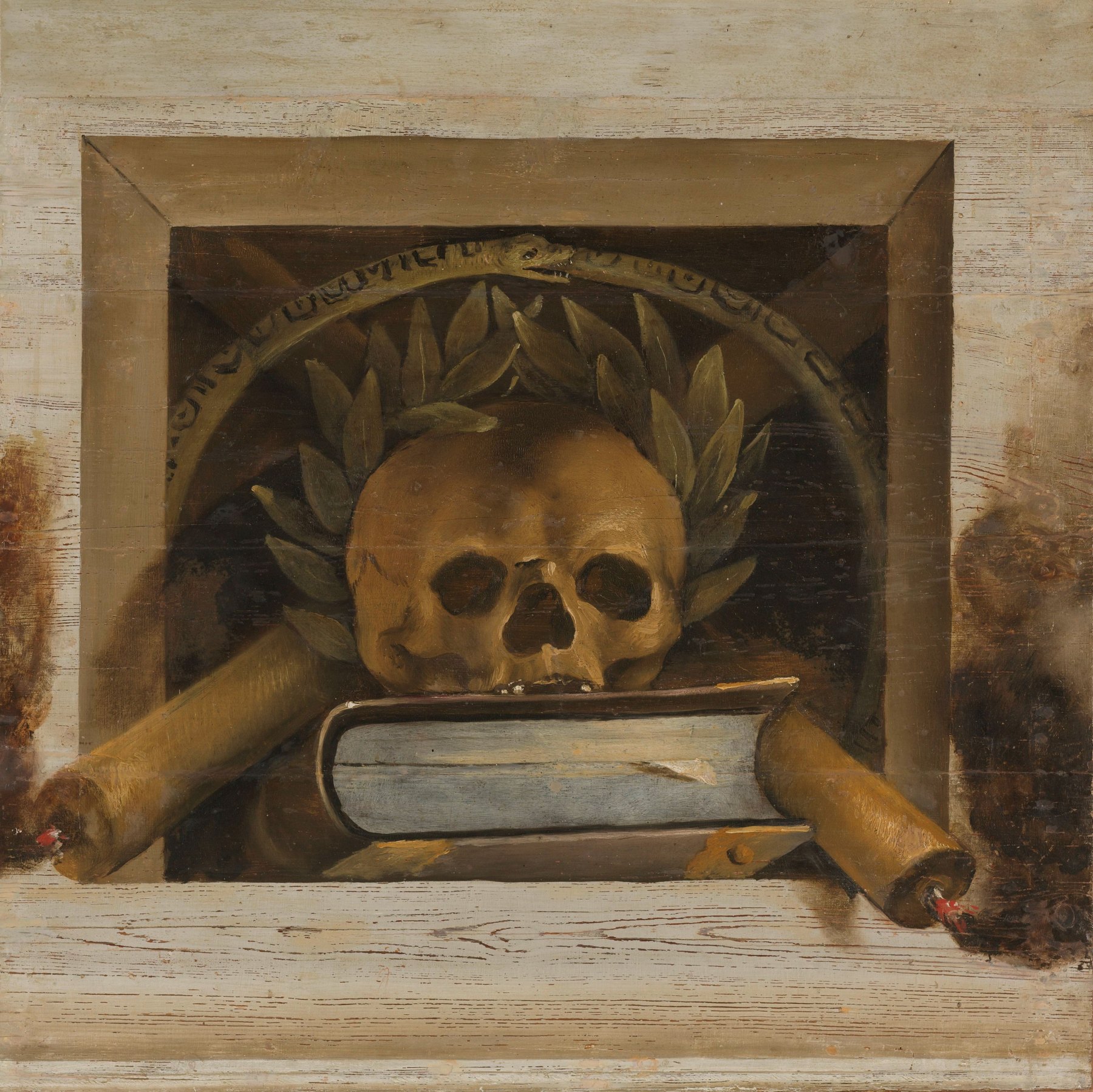
Symbols of vanitas
Skull: death. Extinguished candle: life ending. Books: human knowledge is temporary. Wine glass: pleasure fades.
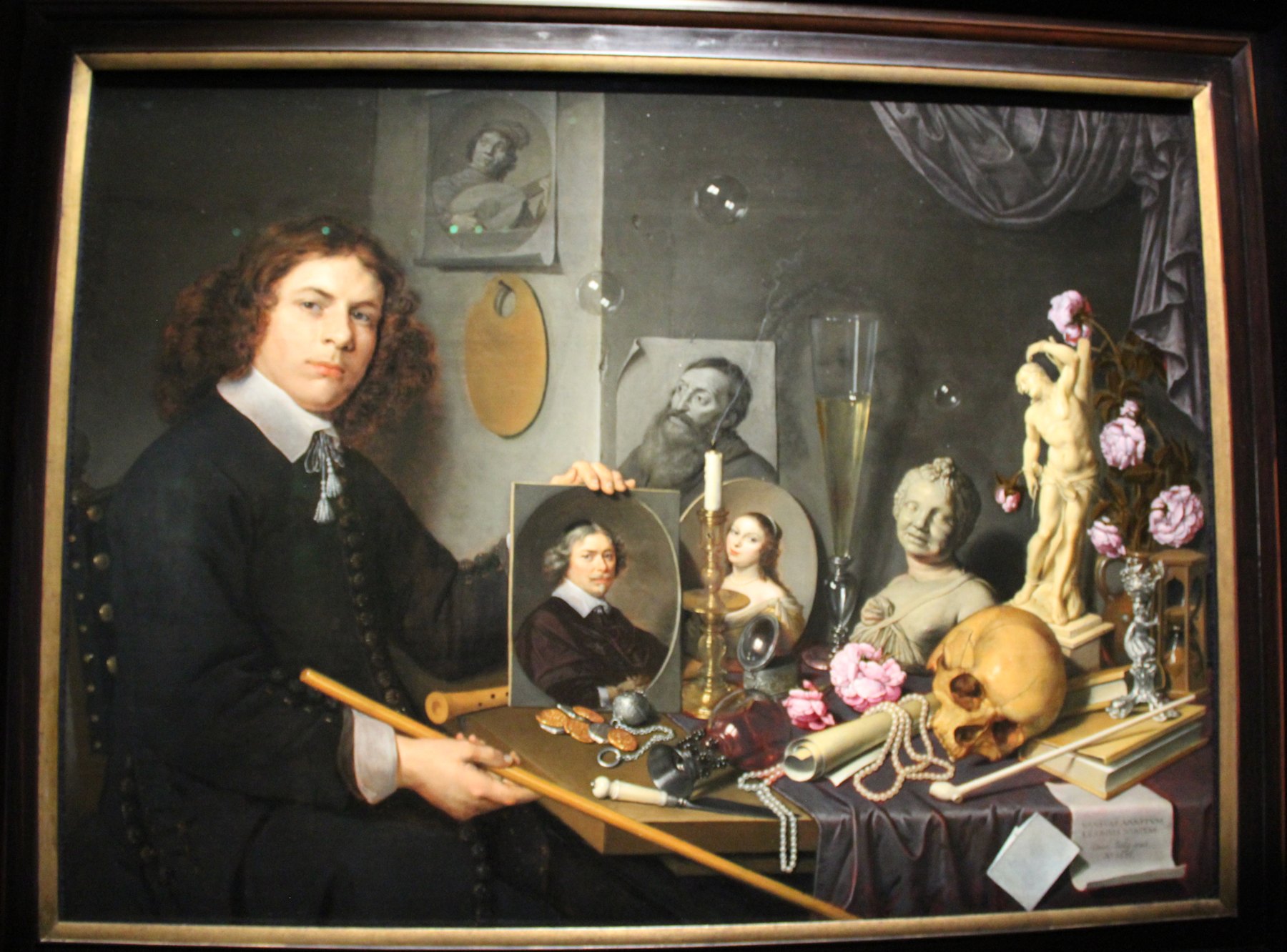
David Bailly — Self-Portrait with Vanitas Symbols
We identify signs of time, death, beauty, wealth, and knowledge, then ask what it means to live wisely in a limited life.
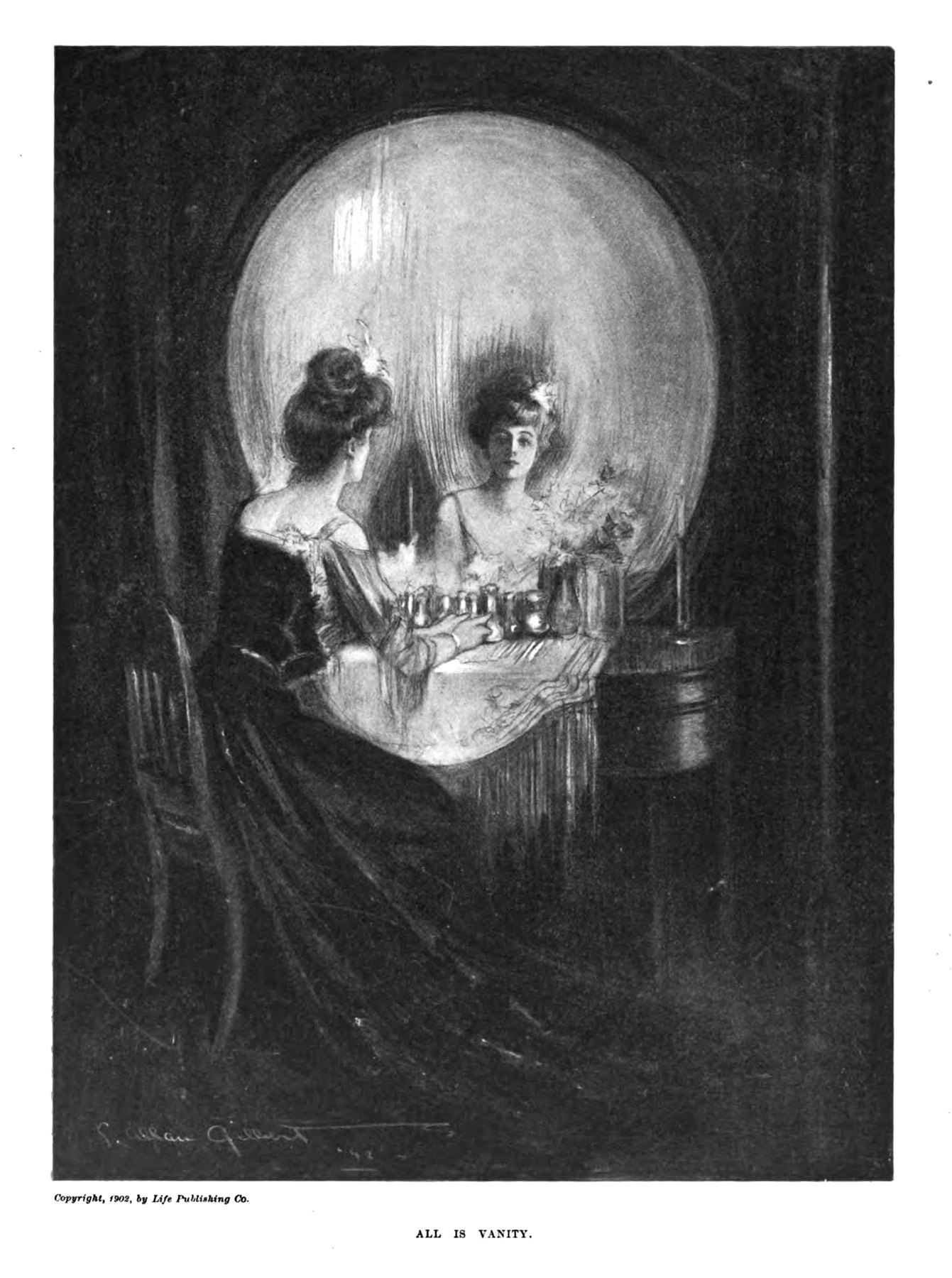
Charles Allan Gilbert — All is Vanity
Do you see the woman at the mirror first, or the skull? The image teaches us that attention changes meaning.
Andy Warhol — Marilyn Diptych
The same face repeats until a person begins to feel like a reproducible image system. Modern fame becomes another kind of vanitas.
The big question
So, is there anything meaningful and worth doing in life?
Ecclesiastes is not saying that life has no meaning. The writer says, “Everything is meaningless,” but in the end he also says: “Respect God and obey His commands. This is what people are meant to do.”
Ecclesiastes 12:13
Student comparison · page 16
Jacob and Esau, through kids' eyes
Esau
- He does not really care about his birthright.
- He loves red bean stew.
- He is a hunter, hairy, and red-haired.
Jacob
- He is ambitious for the birthright and God's blessing.
- He stays home and cooks food.
- He deceives Esau and acts dishonestly.
Final reflection
Both brothers reveal something about meaning. Esau shows what happens when desire rules the moment. Jacob shows what happens when ambition loses integrity. So what is worth doing with our lives?
Then we made our own
Our young artists' responses. Tap to look closer.