How AI represents the world
Representation & information
How can pixels, numbers, words, and other simple pieces represent something larger?
AI Explorer Lab
AI learning for kids centered on understanding and judgment—not merely prompt use. Explore through short lessons, experiments, discussion, puzzles, and open-ended investigation. AI accelerates the work; your questions keep changing its direction.
The apple falls. The Moon does not.
Released objects drop to the ground. The Moon keeps moving overhead and never arrives.
Two motions, described apart. Nothing observed so far says they belong together.
Concrete ideas and skills
AI Explorer Lab combines core AI ideas with experiments, discussion, and open exploration. Students build practical mental models of how AI works, where it fails, and when human judgment matters.
How AI represents the world
How can pixels, numbers, words, and other simple pieces represent something larger?
How machines learn
Students change examples and datasets to see what a model actually learns—and how human choices shape the result.
Where AI fails
Break apparently successful systems with unusual cases, then ask what the failures reveal.
How language models predict
Explore how context changes likely continuations—and why a fluent answer is not necessarily a true one.
When to trust, check, or use a tool
Decide when an AI answer is enough, when evidence is needed, and when the system should calculate, search, run code, ask a human, or say it does not know.
Thinking and creating with AI
Use AI to expand possibilities, challenge assumptions, organize arguments, and investigate new questions without handing over the final judgment.
Example investigations include: What counts as AI? · What does a machine learn from examples? · Can you break an image recognizer? · Is more data always better? · Why can a language model sound right and still be wrong? · When should AI decide, recommend, check a tool, or step aside?
Course format
Sessions may combine concise teacher-led explanation, individual exploration, hands-on experiments, structured discussion, interactive digital worlds and tools, and open investigation. The mix changes with the question; no single sequence is imposed on every lesson.
A recurring inquiry rhythm
Many investigations move through these moments, but not every lesson uses every step—or uses them in this order.
Learn together
How data shapes an answer. Why confidence can be wrong. How context changes a response. When AI needs another tool. How to test what it says—and how human choices shape the system.
Explore with AI
Ask a question, build an explanation, design an experiment, follow an unexpected result, and decide what the evidence means.
Earlier explorations & prototypes
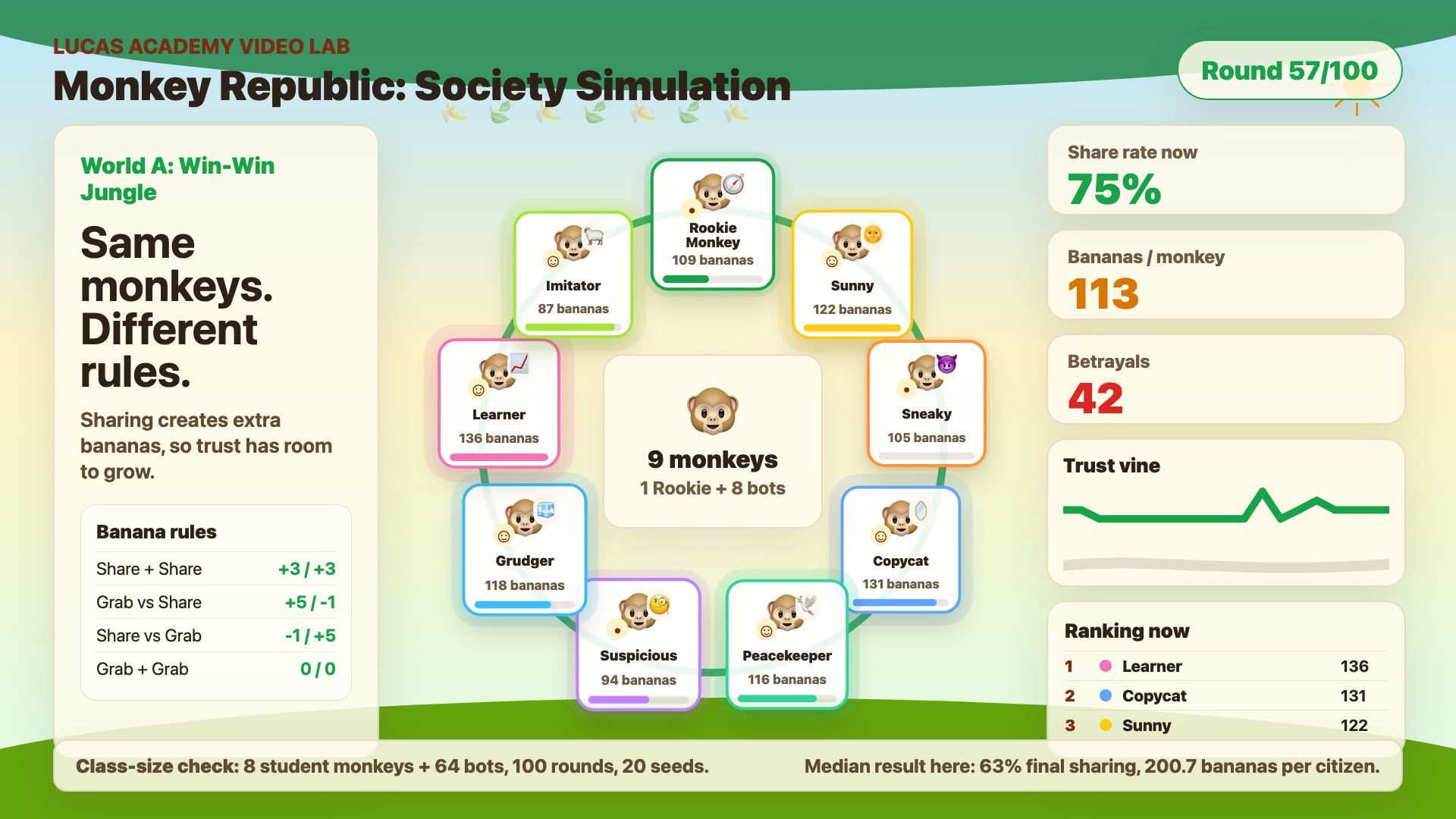
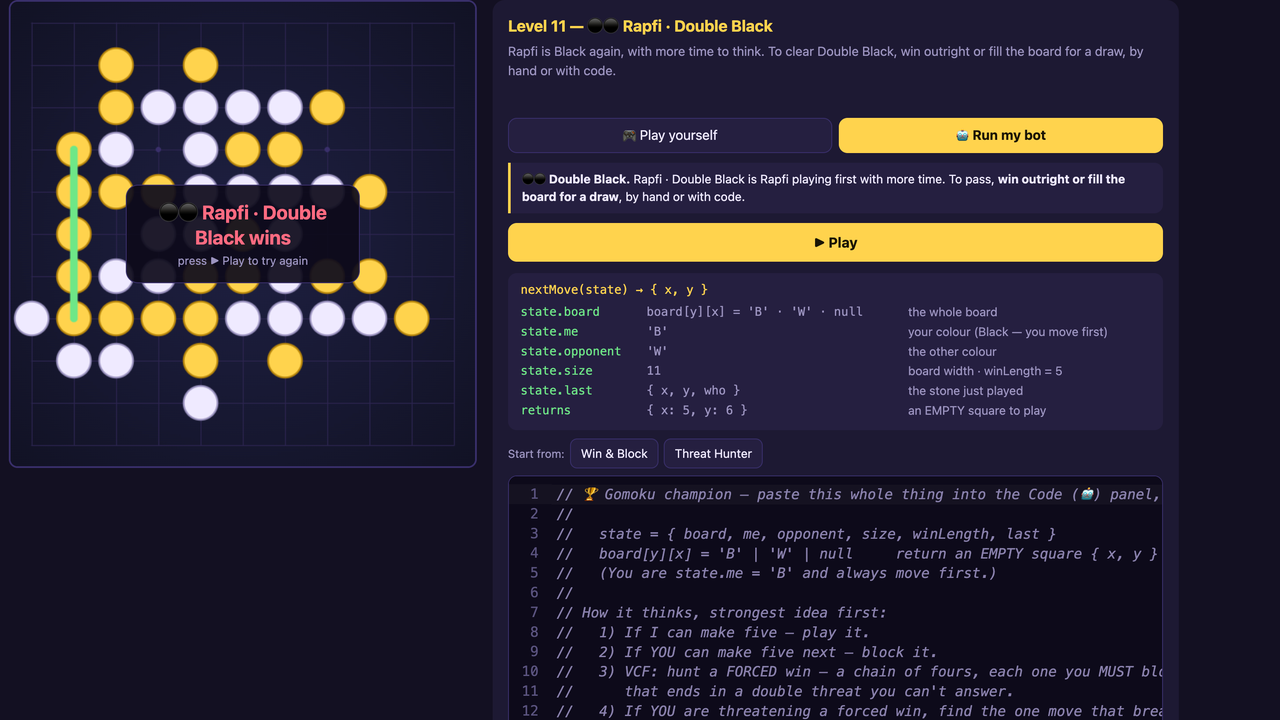
Still playable, now placed in context: these are laboratories for strategy, systems, evidence, and collaboration—not separate course identities.